
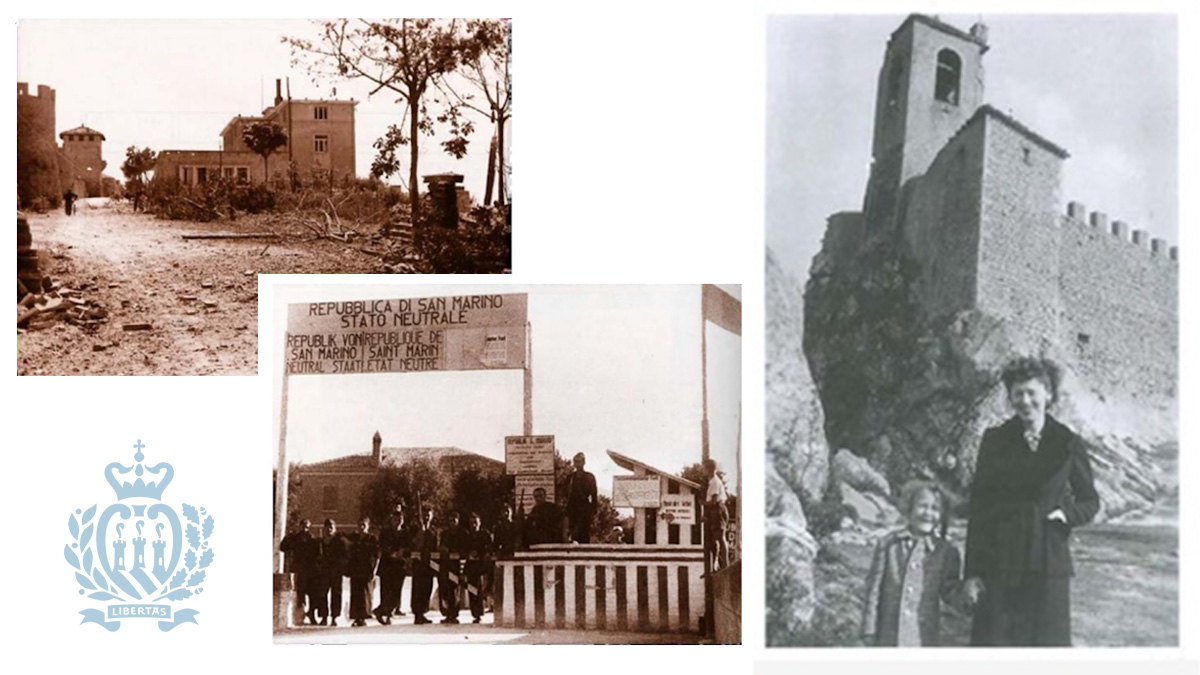
During the Second World War, the Republic of San Marino, one of the world’s smallest and oldest republics, played a little‑known but significant humanitarian role in offering refuge to Jews and other civilians fleeing Nazi–Fascist persecution. Despite its geographic proximity to Fascist Italy and later to German‑occupied territories, San Marino maintained a policy of neutrality throughout the war, enabling it to become a safe haven during one of Europe’s darkest periods.
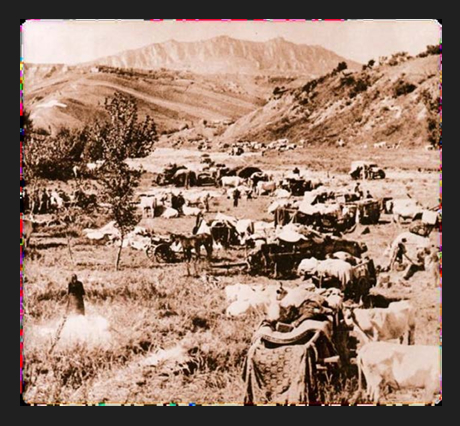
Between 1939 and 1945, San Marino welcomed an estimated 100,000 Italian refugees, among them around 12,000 Jews, a remarkable figure given that the country had only about 15,000 inhabitants at the time. Even while the Sammarinese government enacted racial laws aligned with Italy in 1942, the country nonetheless continued to receive large numbers of Jews escaping persecution and violence.
San Marino’s tradition of Jewish presence dates back to at least the late 14th century, with archival documents confirming centuries of commercial and social interactions between Jews and the local population. Although Jews historically faced restrictions such as wearing special identifying badges, they were simultaneously granted official protection and were never forced into ghettos within the republic. This long‑standing coexistence set the cultural foundation that later contributed to San Marino’s humanitarian actions during the war.
The country’s wartime hospitality is documented extensively in La meravigliosa bugia, the work of D. Bagnaresi, G. Marzi, and A. Morri, which chronicles the stories, documents, and personal testimonies of Jewish refugees who sought safety in San Marino between 1939 and 1945. These accounts reflect both the courage of those fleeing persecution and the moral resolve of the Sammarinese people who received them.
San Marino’s commitment to neutrality was repeatedly tested. In September 1944, the republic was briefly occupied by German forces, only to be liberated shortly afterwards by the British 8th Army. Yet even amid military operations, San Marino continued to shelter displaced civilians, including significant numbers of Jews, demonstrating a consistent humanitarian stance despite political pressures from surrounding regimes.
The international community has recognised this legacy. In a 2013 visit, United Nations Secretary‑General Ban Ki‑moon praised San Marino for opening its borders during the war and for taking in refugees at a scale “up to five times higher than the country’s own population,” a testament to its profound commitment to human dignity.
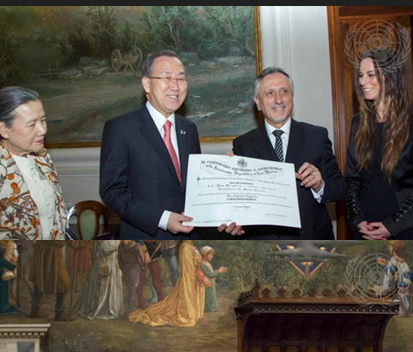
San Marino’s protection of Jews during the Holocaust, a little-known yet vital chapter in European history, stemmed from a long history of Jewish and Sammarinese coexistence and demonstrated profound compassion during a critical time.
Further readings:
Presentation on Jewish Refugees in San Marino (1939-1945), based on “La meravigliosa bugia” by D. Bagnaresi, G. Marzi, and A. Morri – This presentation was prepared for an educational project developed by students and schools in the Republic of San Marino and is part of a major initiative to remember the welcome of Jewish refugees during World War II. The Consulate is not responsible for any misinterpretation of facts or errors.
Consul Bragagni attends the Gala Dinner in support of the National Holocaust Museum

